
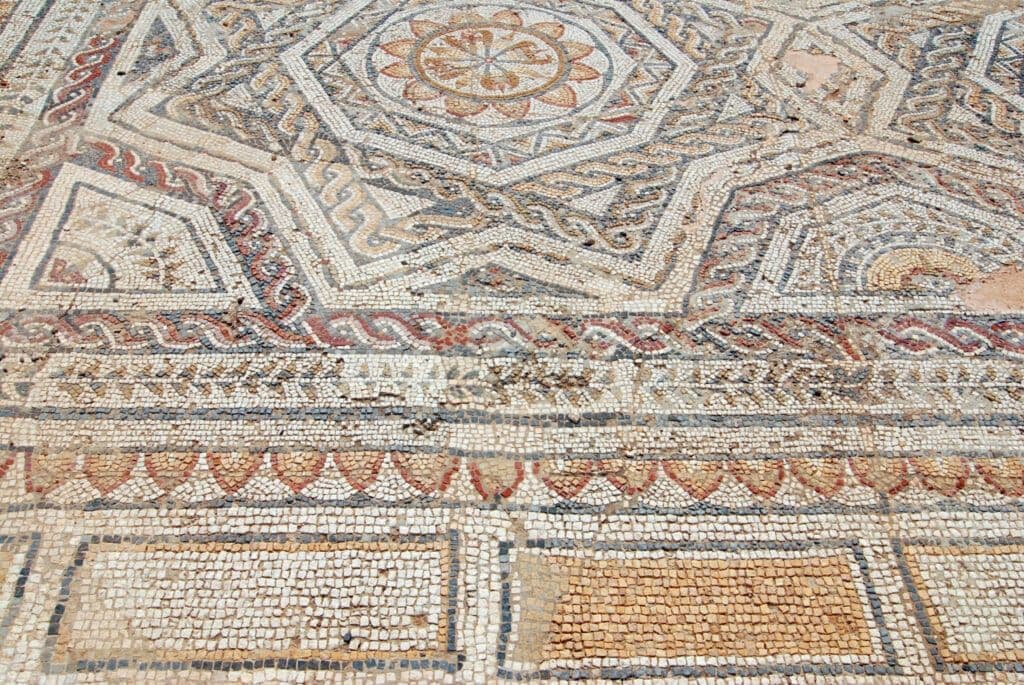
Explore Tile Flooring Throughout History
Have you ever stood in your bathroom or kitchen and wondered how the tile flooring underneath your feet came to be? The tile we have in our homes today is possible thanks to thousands of years of innovation, creativity, and collaboration. Let’s take a look at the history of tile flooring, from its ancient beginnings to the 21st century.
There are many types of tile out there, but in this blog post, we’ll be focusing on ceramic tile, which is created by firing thin slabs made from a mixture of clay, water, and other inorganic materials, then typically coated with some type of glaze.
Ancient History: The Origins of Tile Flooring
As an art form, ceramics are rooted in ancient Chinese pottery, which has been around since at least 20,000 B.C. This art form eventually spread to other civilizations through Persian traders.
For thousands of years, ancient peoples used glazed brick and ceramics to strengthen walls and create reliefs, mosaics, and murals. From Mesopotamia to Rome to Persia to India to Greece, we have unearthed countless artifacts around the world that show us how these civilizations helped develop the precursors to the tile flooring we know today.
Mesopotamian craftsmen were especially influential in shaping the art of ceramics. Since stone was scarce in Mesopotamia, sun-dried bricks and adobe were commonly used as building materials. Kiln-fired bricks were used as a protective layer on the outside of their most important structures, including temples, gates, and city walls. These Mesopotamian artisans traveled to Persia to help create palaces such as Persepolis.
Request Your Free Estimate
Window replacement is one of the largest investments many Utah homeowners make in their home. If you have already started requesting estimates, you have probably noticed something frustrating: one contractor recommends insert windows, another insists on a full-frame replacement...

Replacing an exterior door is something most homeowners will only do a handful of times during their lives. If you’ve already started researching options, you may have discovered something frustrating: choosing a new door often creates more questions than answers.

Remodeling your home is exciting. Knowing where to begin isn't always as exciting. For many Utah homeowners considering a bathroom remodel, kitchen renovation, or interior home improvement project, the consultation is the biggest unknown. Will someone pressure you...

The Ancient Greeks may have been the first to use ceramic tiles as flooring. They created elaborate mosaic floors depicting patterns, designs, portraits, and images of gods. Many of these works of art are still around today, standing as a testament to the durability of tile as a building material.
The Middle Ages and Renaissance
As the Romans occupied territories throughout Western Europe, they introduced tile-making to a wide swath of people. However, this art form was eventually forgotten in Europe until the 12th century when Cistercian monks developed a way to make encaustic floor tiles for cathedral and church floors.
Following the Reformation in the 16th century and the beginning of the Renaissance era, this craft was lost again, and tile wouldn’t be made again in Europe until the middle of the 18th century, with the exception of Holland’s famous blue-and-white Delftware tiles.
While Europeans weren’t known for tile-making during this time period, the use of ceramic tile for mosaics was popular throughout the Ottoman Empire and the Middle East. Many mosques built in the Middle Ages feature incredibly intricate tile designs on nearly every surface, creating dazzling displays.
Islamic craftsmen developed the moraq technique, in which single-color tiles were cut into small pieces and then assembled by pouring liquid plaster between them. After the panels hardened, they were assembled on interior and exterior building surfaces.
Victorian Revival
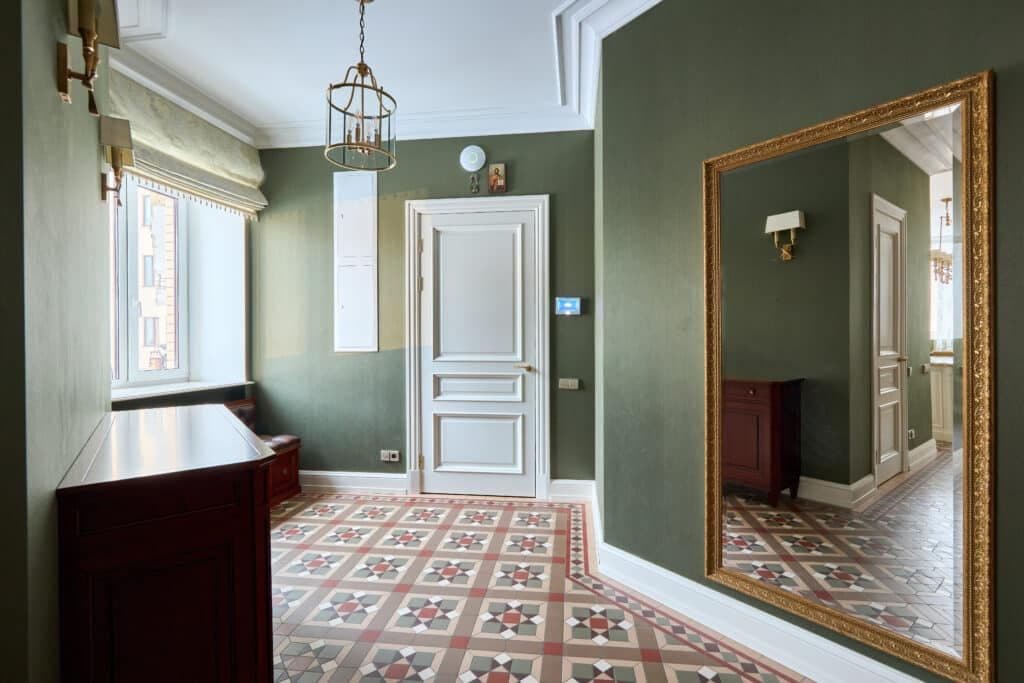
Thanks to manufacturing advancements, the Victorian period saw a revival in tile-making, especially as part of the neo-Gothic and Arts and Crafts movements. Tile flooring has remained standard for kitchens, bathrooms, and some public spaces ever since.
Englishman Herbert Minton is credited with reviving the lost craft of encaustic tile-making in 1843. The tile flooring industry was further revolutionized by the development of the “dust-pressing” method. Instead of making tiles by hand using wet clay, craftsmen could now compress nearly dry clay between two metal dies. This allowed floor tiles to be produced quicker and cheaper than ever.
Thanks to its exhibits of European decorative floor tiles, the 1876 Philadelphia Centennial Exposition was a major factor in popularizing ceramic tile flooring in the United States. Wealthy Americans imported decorative tiles from England, and soon, the U.S. tile industry was booming.
The 20th Century
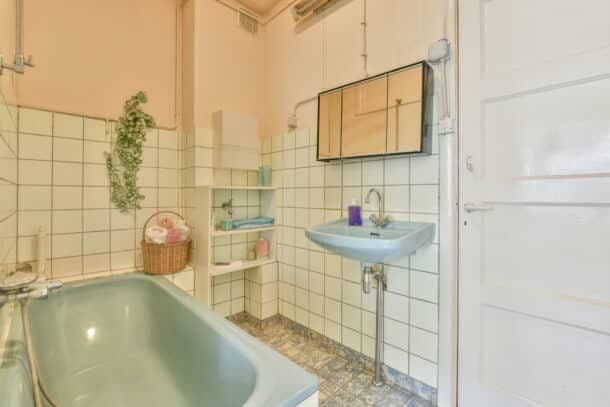
Most ceramic floor tiles manufactured in the U.S. were encaustic, but over time, various factories developed and produced other products, including mosaic tiles, vitreous wall tiles, rubber interlocking floor tiles, and tiles with variegated and colored glazes. Ceramic mosaic tiles were pre-mounted on sheets of paper, making the installation process much quicker and easier.
Post World War II, further technological advancements allowed dust-pressed tiles to be created in just two hours, start to finish — a fraction of the 70-plus hours previously required. Still, the demand for decorative tiles had diminished significantly by the 1930s, and floor tiles were generally seen as merely utilitarian.
Tile Flooring Today
Today’s tile flooring is the result of thousands of years of creativity and innovation. We have unprecedented access to tile flooring of all types, with endless design possibilities at our fingertips. With the recent decline of minimalist aesthetics, decorative tile has seen a resurgence in popularity. Who knows what the future holds? All we can be certain of is that tile flooring isn’t going anywhere anytime soon.
Trust the Tile Flooring Experts
Rosewood Painting & Remodeling is Northern Utah’s flooring experts. Whether you prefer tile, hardwood, luxury vinyl, laminate, or carpet, we offer a wide selection of options for any home. Contact us today to get started!
Check Out Our Reviews

Mitch and the Rosewood Team are true pros! Outstanding quality with great communication and attention to their clients’ budget. They recently repaired an exterior door for me that I was certain would need replacing. They did excellent work and saved me several thousand dollars compared to what a full replacement would have cost.
Mitch and his group do an amazing job at window replacement. New windows help with home efficency, noise, and so many other things. If you are looking for new windows, I would give them a call, it is well worth the time to talk to them about how they can help you.
The team from Rosewood did an amazing job installing this set of doors to complete a project of turning this room into my wife’s home office. They are kind, competent, and very skilled! They did a great job installing and putting the finishing touches to these doors.
All around a top notch and professional contractors. I had a great experience with their customer service in getting a quote and set up for a cabinet painting job at my home. The team lead for the project Ben and his crew member Drake were very professional and friendly. They did a phenomenal job on our cabinets and cleaned up everything thoroughly. Couldn’t have asked for a better team!
Great company with good communication and quality work. I have used them for two projects so far and satisfied with both. Pricing is reasonable and they are flexible to adjust the bid as needs require. Highly recommended.




Contact Us

Mon-Fri: 8:00am-5:00pm
Sat-Sun: Closed