
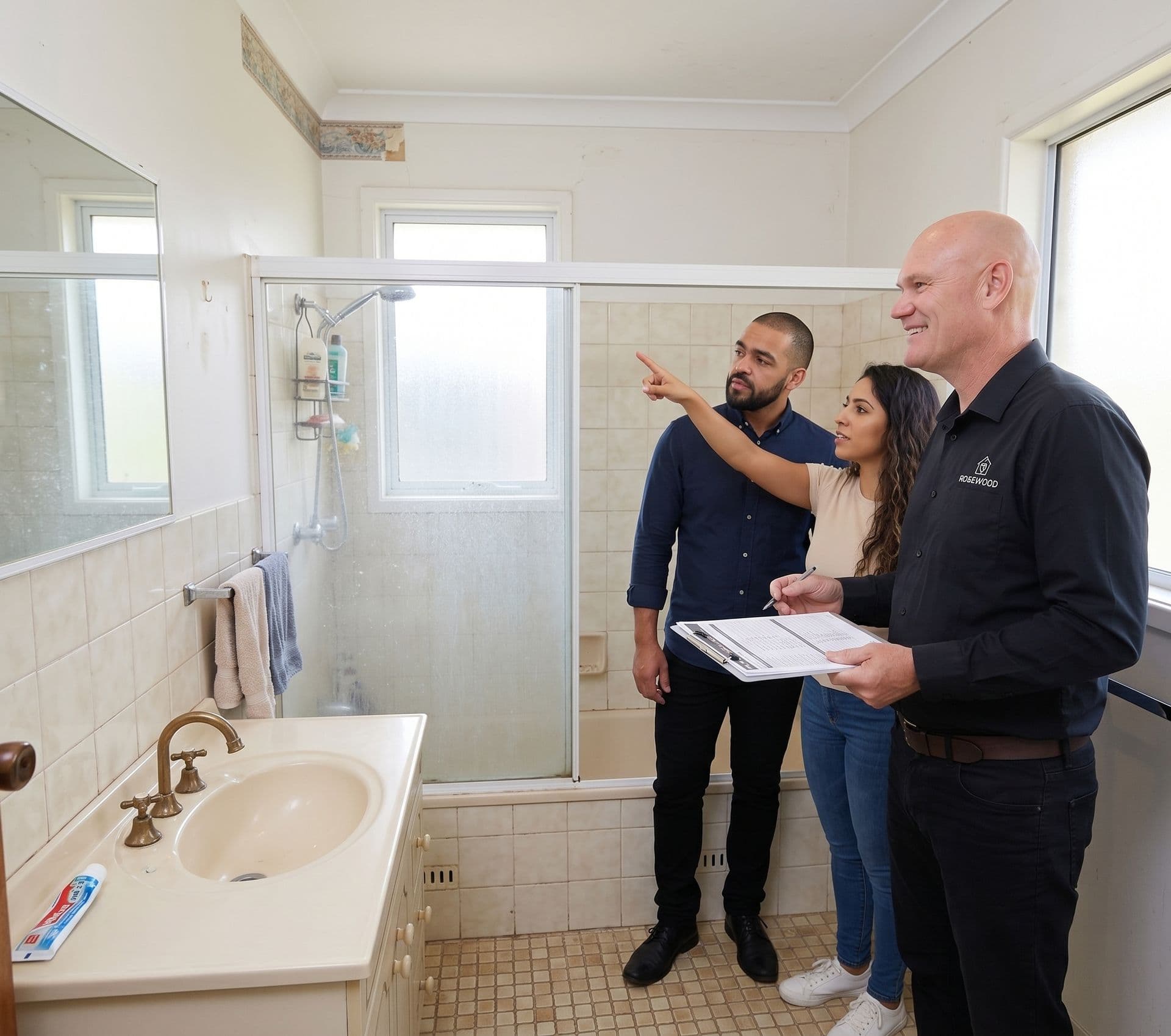
HOW TO PREPARE FOR A BATHROOM OR INTERIOR HOME REMODELING CONSULTATION: A Utah Homeowner's Guide
Remodeling your home is exciting. Knowing where to begin isn't always as exciting.
For many Utah homeowners considering a bathroom remodel, kitchen renovation, or interior home improvement project, the consultation is the biggest unknown.
Will someone pressure you into making a decision?
Will you receive pricing that actually reflects your project?
How much do you need to have figured out before the appointment?
And perhaps the biggest question of all:
How do you know if you're choosing the right contractor?
Those concerns are completely understandable.
Remodeling your home is a significant investment, and unlike many home improvement projects, there are dozens of decisions that influence the final design, budget, and timeline. Many homeowners only complete a major renovation once or twice in their lifetime, while remodeling contractors help guide homeowners through these decisions every day.
At Rosewood Home Remodeling, we believe the best remodeling projects begin long before construction starts. They begin with education, honest communication, and helping homeowners understand their options before making important decisions.
A successful remodeling project is about more than choosing beautiful finishes. It requires thoughtful planning, clear expectations, quality craftsmanship, and a contractor who understands what you are trying to accomplish with your home.
This guide is designed for homeowners in Layton, Weber County, Davis County, and surrounding Utah communities who are considering a bathroom remodel, kitchen renovation, basement finishing project, or other interior home remodeling project.
Because bathroom remodeling is one of our specialties, many of the examples throughout this guide focus on bathrooms. However, the same planning principles apply whether you're remodeling a kitchen, finishing a basement, or updating another interior living space.
Whether you choose Rosewood Home Remodeling or another contractor, preparing for your consultation will help you ask better questions, communicate your goals more clearly, and make more confident decisions throughout the remodeling process.
In this guide, we'll walk through everything you should know before your consultation—from preparing your ideas and understanding what affects your investment to knowing what questions to ask, what mistakes to avoid, and what to expect from the remodeling process from start to finish.
WHY PREPARING FOR YOUR REMODELING CONSULTATION SAVES TIME, MONEY, AND STRESS
Unlike many home improvement projects, remodeling is rarely as simple as measuring a space and providing a quote.
Bathroom remodels, in particular, involve more product selections and design decisions than most homeowners expect. From shower systems and vanities to tile, flooring, plumbing fixtures, lighting, and paint colors, each decision influences the final design, budget, and timeline. The same is true of kitchen and basement renovations.
The good news?
You don't need to have every decision made before your consultation.
That's one of the reasons you're meeting with a remodeling professional in the first place.
However, homeowners who spend just 20–30 minutes preparing beforehand often have more productive consultations and move through the design process much more efficiently.
Having a clearer vision allows your contractor to better understand your goals, develop a more realistic preliminary budget, reduce unnecessary revisions later, and move your project toward scheduling sooner once you're ready to move forward.
Whether you're planning a custom bathroom remodel, updating a kitchen, or finishing a basement, investing a little time preparing beforehand can save considerable time throughout the planning process.
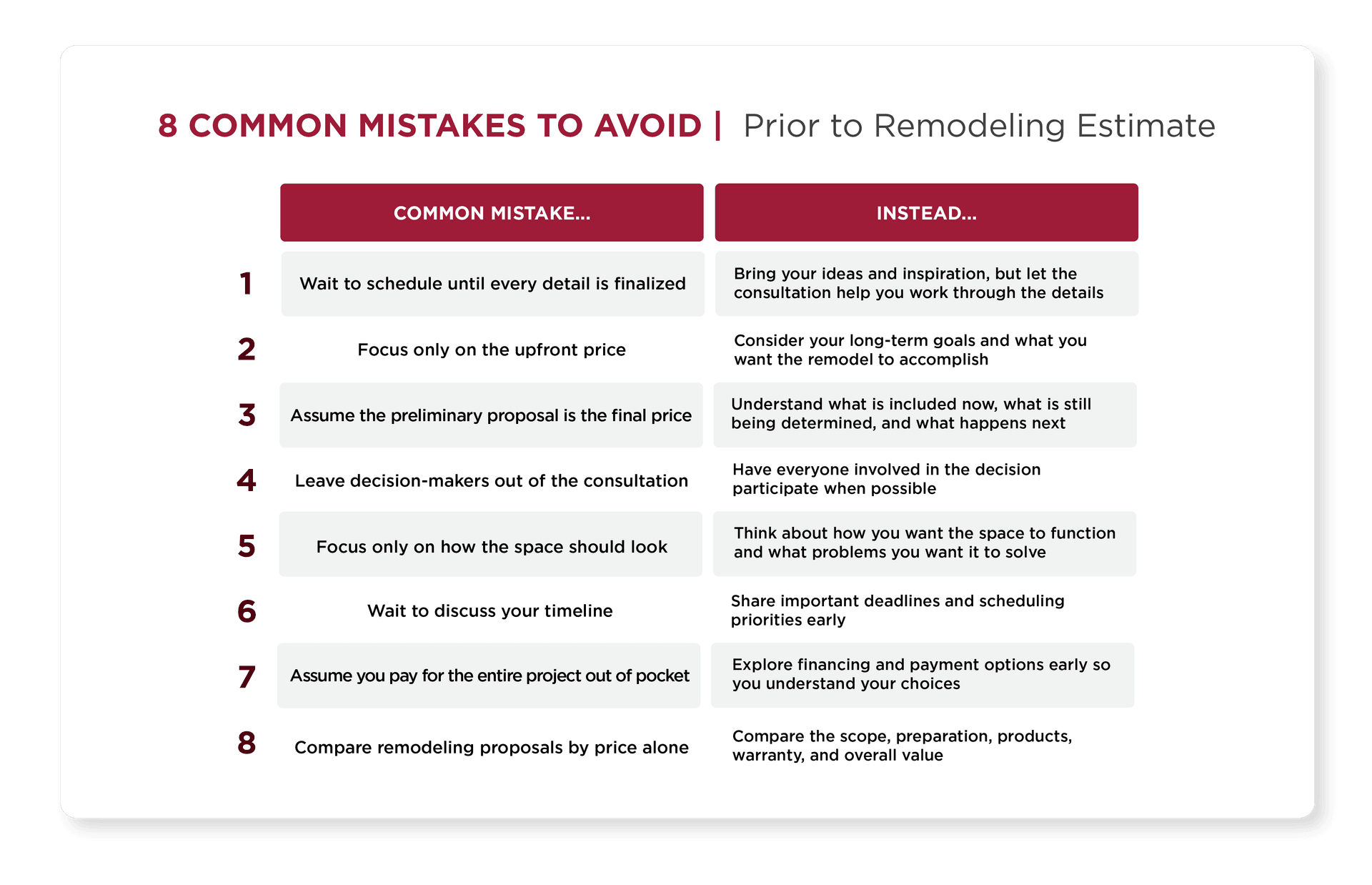
8 MISTAKES UTAH HOMEOWNERS MAKE BEFORE A REMODELING CONSULTATION (And How to Avoid Them)
1. Waiting Until Every Detail Is Finalized Before Scheduling a Consultation

One of the biggest misconceptions homeowners have is that they need to know exactly what they want before reaching out to a remodeling contractor.
Many people delay scheduling an appointment because they haven't chosen the perfect vanity, selected their tile, picked out fixtures, or finalized every design decision. In reality, helping homeowners make those decisions is an important part of the remodeling process.
That said, the more direction you can provide before your consultation, the more productive your appointment is likely to be. The homeowners who move through the design process most efficiently typically spend a little time beforehand gathering inspiration and thinking about what they want their finished space to accomplish.
Before your bathroom or other home remodeling consultation, it helps to have:
- Inspiration photos that reflect the style you like
- Photos or ideas you've saved of bathroom layouts, shower designs, tile combinations, flooring ideas or fixture selections
- A list of what you enjoy—and what frustrates you—about your current space
- Features that are most important to your family
- Any products or finishes you've already selected
You don't need every decision made before your consultation. But the more clearly you can communicate your vision, the easier it becomes to develop a design, build a realistic preliminary budget, minimize revisions, and keep your remodeling project moving toward construction.
2. Focusing Only on Upfront Cost Instead of Long-Term Goals
When planning a bathroom remodel or interior renovation, cost is naturally one of the first questions homeowners consider.
And it should be.
A remodeling project needs to fit within your investment goals and your financial situation. However, focusing only on the lowest upfront price can sometimes cause homeowners to overlook the factors that determine whether they will be satisfied with the finished project years from now.
Before comparing proposals, it helps to start with a more important question:
What do I want my new bathroom—or remodeled living space—to do better than it does today?
Consider questions like:
- Am I updating my bathroom because it feels outdated, or because the space no longer functions well for my family?
- Am I looking for a simple refresh, or do I want a complete transformation?
- Do I plan to stay in my home for many years and want a space designed around how I live?
- Am I hoping to improve storage, comfort, accessibility, or daily functionality?
- Are there problems with my current space that need to be addressed before focusing on finishes and design?
- Do I want the lowest upfront investment, or do I want a project built with materials and craftsmanship that will hold up over time?
- Understanding your goals allows your contractor to recommend the right solutions instead of simply creating the least expensive option.
A lower proposal may look appealing initially, but the lowest price does not always provide the best long-term value. Differences in planning, materials, preparation, workmanship, and included services can have a significant impact on how satisfied you are with the project years later.
The goal is not simply to spend more.
The goal is to create a space that solves your problems, fits your lifestyle, and delivers the results you expect from your investment.
3. Not Understanding What Is Actually Included in the Preliminary Proposal
Unlike painting or window replacement, a custom remodeling project often cannot be fully defined during the first appointment.
Many design decisions—such as tile, flooring, fixtures, cabinetry, countertops, and other finish selections—are made later in the planning process. Because those choices directly affect the final investment, the initial proposal is typically designed to establish the overall scope of work and provide a realistic budget based on the information available at that stage.
Instead of comparing proposals based only on the bottom-line price, take time to review what each contractor has included.
Ask yourself:
- Does the proposal reflect everything we discussed during the consultation?
- Is the scope of work clear and easy to understand?
- Are the products, allowances, or budget assumptions consistent with the type of remodel I'm planning?
- Does it clearly identify what is included today and what selections or decisions will be finalized later?
- Do I understand what the next steps are before final pricing is established?
A good preliminary proposal should leave you with a clear understanding of the project's direction, a realistic investment range, and what still needs to happen before construction begins. Rather than trying to answer every question on day one, it should provide a solid roadmap for moving your project through design, material selections, and final pricing with fewer surprises along the way.
4. Not Having All Decision-Makers Present for the Consultation
One of the easiest ways to slow down a remodeling project is having important decision-makers absent from the original conversation.
If multiple people will be involved in approving your bathroom remodel, kitchen renovation, or basement finishing project, we strongly recommend that everyone attends the consultation.
Having everyone present allows you to hear the same recommendations firsthand, ask questions together, discuss priorities, and make informed decisions as a team.
Whether you're reviewing layout ideas, discussing product selections, evaluating your preliminary budget, or determining the right timeline, everyone starts with the same information.
This often eliminates unnecessary back-and-forth after the appointment, helps decisions happen more efficiently, and allows your project to move toward design and scheduling sooner once you're ready to move forward.
5. Not Thinking About How You Want the Space to Function
One of the biggest opportunities homeowners miss before a remodeling consultation is focusing only on how they want the space to look instead of how they want it to function.
Beautiful finishes are important, but great remodeling is about solving everyday frustrations.
Before your consultation, you want to think about questions that apply to functionality. For example with a bathroom remodel you may want to ask yourself questions like:
- What frustrates you most about your current bathroom?
- Do you wish your shower were larger or easier to access?
- Would additional vanity or linen storage make the space more functional?
- Is the lighting sufficient for getting ready each morning?
- Would a different layout improve how your family uses the space?
- Are there accessibility concerns you want to address?
- Is your family using the space differently than when it was originally built?
For many homeowners throughout Layton, Weber County, Davis County, and the Wasatch Front, these conversations lead to ideas they hadn't considered before.
The more your contractor understands how you want the space to function—not just how you want it to look—the better they can recommend solutions that improve your home for years to come.
6. Not Discussing Your Timeline Early Enough
Your desired timeline is an important part of planning any remodeling project.
Whether you're remodeling a primary bathroom, updating your kitchen, or finishing a basement, be sure to share any important deadlines during your consultation.
For example, are you hoping to complete your project before:
- Hosting family or holiday gatherings
- A wedding or special event
- Welcoming a new baby
- Moving into your home
- Listing your home for sale
- Another remodeling project begins
Sharing your timeline early helps your contractor understand your priorities, develop a realistic schedule, and explain what is achievable based on the project's scope and current production schedule.
Remodeling often involves product ordering, design decisions, and multiple trades working together. The sooner everyone understands your desired timeline, the easier it is to keep the project moving forward.
7. Assuming You Need to Pay for Your Remodeling Project Out of Pocket
Many homeowners delay a bathroom remodel or interior renovation because they assume they need to save enough money to pay for the entire project upfront.
In reality, financing is a common way homeowners pay for remodeling projects. While some families prefer to pay in cash, many choose to finance all or part of the investment so they can begin enjoying the improvements sooner rather than waiting years to save the full amount.
Financing can also provide additional flexibility by allowing homeowners to:
- Preserve savings for emergencies or other financial goals
- Spread the investment into manageable monthly payments
- Complete the project sooner instead of remodeling in phases
- Choose products and features that better meet their long-term goals rather than settling for short-term compromises
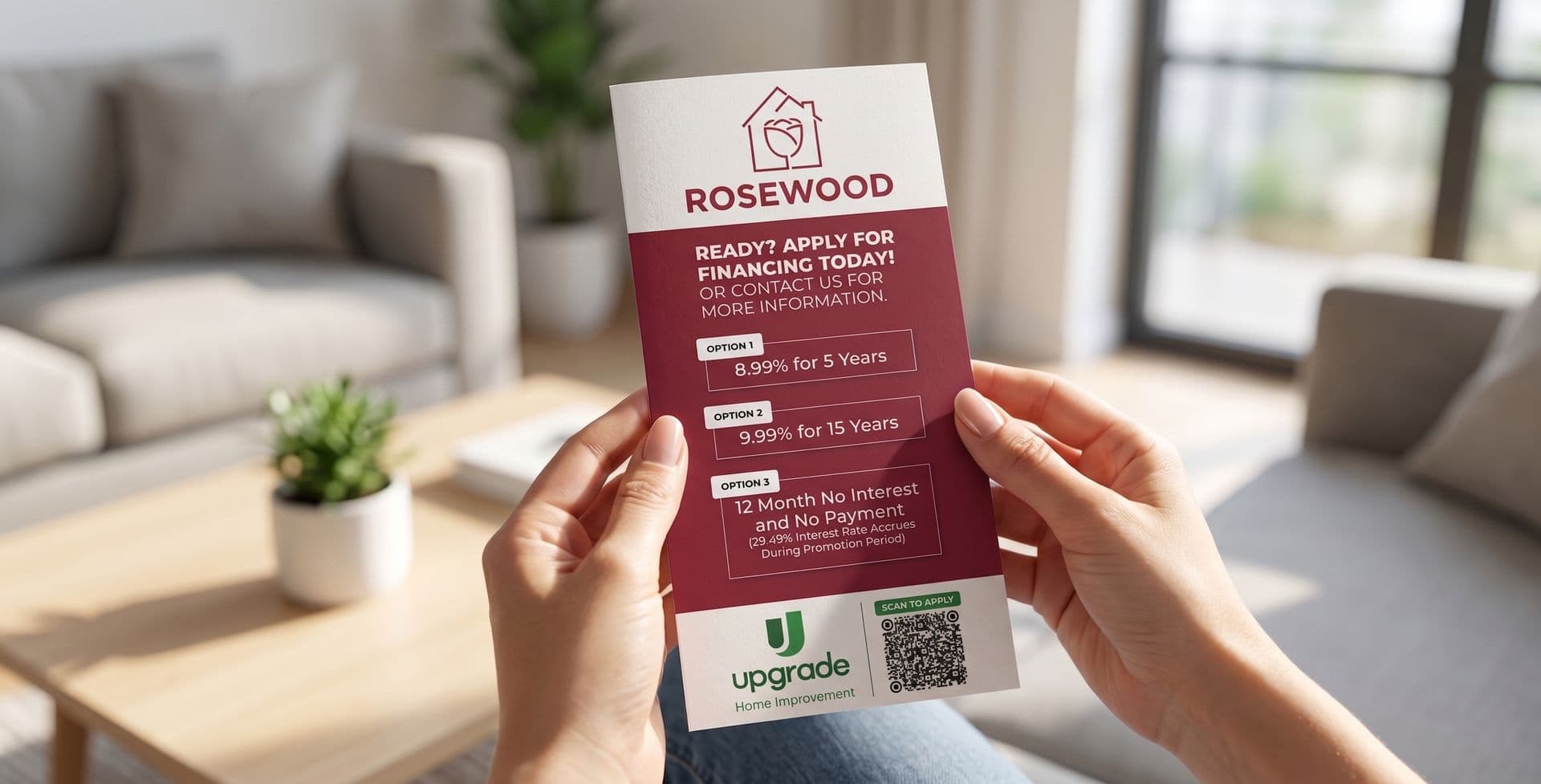
At Rosewood Home Remodeling, we offer financing options to help homeowners choose the payment approach that best fits their budget and financial goals. Whether financing is the right choice depends on your individual situation, but understanding your options early in the process can help you make a more informed decision.
If you'd like to learn more, you can explore our Financing Options page before your consultation or ask about financing during your appointment.
8. Comparing Remodeling Estimates Based Solely on Price
When comparing remodeling proposals, it's easy to focus on the bottom-line number.
After all, every contractor is remodeling the same bathroom...right?
Not necessarily.
Different contractors may recommend different layouts, include different products, plan for different levels of preparation, or approach the project in completely different ways.
Rather than asking, "Which proposal is the least expensive?", ask:
"Which proposal best reflects the project I actually want?"
Compare things like:
- Overall scope of work
- Materials and product allowances
- Preparation and planning
- Design assistance
- Communication throughout the project
- Warranty coverage
- Reviews and reputation
- Overall value—not just the initial investment
A Real-World Example
We've seen firsthand why comparing remodeling proposals requires more than looking at the bottom-line number.
Recently, we prepared a preliminary budget for a homeowner planning a significant interior remodeling project. Our initial budget came in around $100,000. When the homeowner compared our proposal with another contractor, the difference was hard to ignore—the other company was around $80,000.
At first glance, a $20,000 difference can make the decision seem pretty straightforward.
But when we looked more closely at the two proposals, there was an important difference: the level of detail behind the numbers.
Our proposal included detailed budget estimates for the different components of the project, along with information about the factors that could cause those numbers to increase or decrease. After years of remodeling homes, we've developed a good understanding of what different portions of a project typically require and where homeowners are most likely to see their budgets change as the project develops.
The other proposal was much less detailed. That doesn't necessarily mean it was a bad proposal or that the contractor couldn't complete the project for that amount. It simply meant that more of the project's costs were still undefined.
And that's an important distinction when comparing remodeling estimates. When a proposal doesn't account for the variables that can affect a project's budget, there's a greater chance that costs will surface later as the work progresses. What looks like a lower price upfront can become more expensive through added costs and change orders once construction is underway.
A lower preliminary number isn't necessarily a better deal—and a higher number isn't necessarily a better project. The real question is what is behind the number and how much of the project has actually been accounted for.
Understanding the scope, allowances, assumptions, and potential variables in each proposal gives you a much better basis for deciding which contractor and project plan are actually right for your home.
That's ultimately the goal when comparing remodeling estimates—not simply finding the lowest price, but understanding the differences between your options and choosing the contractor who provides the right combination of product quality, craftsmanship, communication, and value for your home.
WHAT HAPPENS DURING A PROFESSIONAL REMODELING CONSULTATION? Our 7-Step Process

Every remodeling contractor has a different process.
Understanding what happens during the consultation helps you know what to expect and why each step is important.
Here's what homeowners typically experience during a Rosewood Home Remodeling consultation.
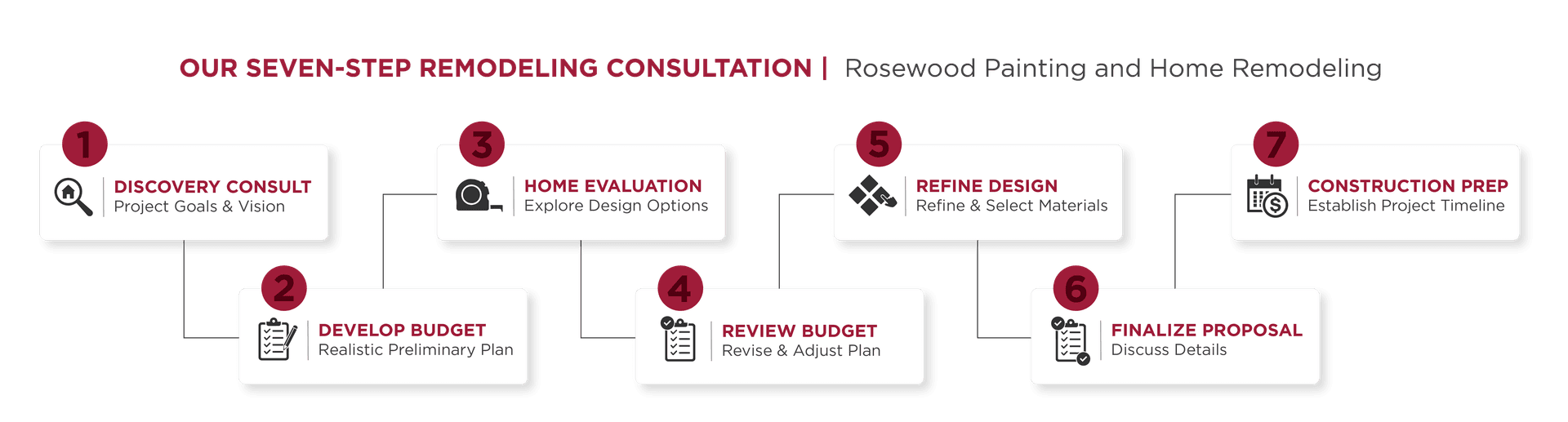
Step 1: A Discovery Conversation About Your Project
Every successful remodel starts with understanding your goals.
Before discussing products or layouts, you'll have a conversation about what you're hoping to accomplish, what's working in your current space, what isn't, and what you'd like your remodeled bathroom or interior living space to look and function like.
This conversation helps establish the direction of the project before any recommendations are made.
Step 2: Developing a Realistic Preliminary Budget
Unlike many home improvement projects, custom remodeling usually cannot be accurately priced during the first meeting.
Before your in-home consultation, information gathered during your discovery call is used to develop a realistic preliminary budget based on the project's scope, similar renovations, and the products you're considering.
Having a preliminary budget allows everyone to have productive conversations built around realistic expectations before moving further into the design process.
Step 3: Evaluating Your Home and Exploring Design Possibilities
During the in-home consultation, your existing space is carefully evaluated while discussing opportunities to improve its function, appearance, and overall layout.
Rather than focusing only on measurements, this step helps identify design possibilities, construction considerations, and any challenges that could influence the project.
It's also an opportunity to ask questions, share inspiration, and discuss ideas that may not have been considered yet.
Step 4: Reviewing the Preliminary Budget Together
Once the project has been discussed, you'll review the preliminary budget together.
This isn't about pressuring you into making a decision.
It's about determining whether the project scope, investment, and expectations are aligned before moving into detailed planning and product selections.
If adjustments are needed, it's much easier to make them at this stage.
Step 5: Refining the Design and Selecting Materials
Once you decide to move forward, the focus shifts from budgeting to creating a remodel that's uniquely yours.
This is when selections such as cabinetry, tile, flooring, countertops, fixtures, paint colors, and other finishing details are finalized.
These decisions play a major role in both the appearance and final investment of your project, which is why they are typically completed after the initial consultation rather than beforehand.
Step 6: Finalizing the Project Details
After your material selections have been made, the project specifications and final pricing are completed.
By this stage, you'll have a clear understanding of exactly what is being built, the products being installed, the overall investment, and what to expect before construction begins.
The goal is to eliminate surprises long before demolition ever starts.
Step 7: Preparing for Construction
Once everything has been finalized, your project moves into production.
You'll know your anticipated start date, estimated construction timeline, communication expectations, and what to expect while work is taking place in your home.
By the time construction begins, there should be very few unanswered questions because the planning has already been completed.
WHY GOOD REMODELING CONTRACTORS DON'T USUALLY PROVIDE SAME-DAY PRICING
One of the most common questions homeowners ask is:
"Will I receive an exact price during my consultation?"
For painting projects, window replacements, or door installations, that is often possible.
Custom remodeling is different.
The final investment depends on dozens of decisions that usually haven't been made during the first appointment, including:
- Cabinetry
- Tile selections
- Flooring
- Fixtures
- Countertops
- Layout modifications
- Plumbing or electrical changes
- Structural considerations
Providing an exact price before those decisions are made would either be inaccurate or require making assumptions that may not reflect the project you ultimately want.
A professional remodeling contractor should be transparent about what can be priced today, what still needs to be determined, and how those future decisions may affect your final investment.
The exception is more standardized remodeling projects—such as certain one-day bath or wet-area remodels—where product options and the scope of work are much more consistent. In those cases, same-day pricing may be possible.
FREQUENTLY ASKED QUESTIONS ABOUT BATHROOM AND INTERIOR REMODELING CONSULTATIONS
Q: How long does a remodeling consultation take?
A: Most consultations last between 60 and 90 minutes, depending on the size and complexity of your project. This provides enough time to discuss your goals, evaluate the space, answer your questions, and review your preliminary budget.
Q: Do I need to choose all my materials before the consultation?
A: No. While gathering inspiration beforehand is helpful, product selections are typically finalized later in the design process after the overall direction of the project has been established.
Q: Will I receive an exact quote that day?
A: For most custom bathroom remodels and interior renovations, final pricing comes after material selections and project details have been finalized. Simpler remodeling projects with more standardized products may qualify for same-day pricing.
Q: Is there any obligation after the consultation?
A: Absolutely not. The goal of the consultation is to educate you, answer your questions, and help you determine whether the project—and the contractor—are the right fit for your home.
THE FOUNDATION OF A SUCCESSFUL REMODELING PROJECT
Preparing for your remodeling consultation doesn't require weeks of planning, but spending a little time thinking through your goals can make a significant difference throughout the entire project.
Whether you're planning a custom bathroom remodel in Layton, a one-day bathroom renovation in Weber County, updating your kitchen in Davis County, or finishing your basement anywhere along the Wasatch Front, understanding the process ahead of time helps you make better decisions, avoid unnecessary surprises, and move into construction with confidence.
At Rosewood Home Remodeling, we believe every successful remodeling project begins with trust, transparency, thoughtful planning, and clear communication long before construction starts.
If you already have a consultation scheduled, we look forward to meeting with you and learning more about your project. If you have not scheduled your consultation yet, we invite you to contact our team to get started.
Check Out Our Reviews

Mitch and the Rosewood Team are true pros! Outstanding quality with great communication and attention to their clients’ budget. They recently repaired an exterior door for me that I was certain would need replacing. They did excellent work and saved me several thousand dollars compared to what a full replacement would have cost.
Mitch and his group do an amazing job at window replacement. New windows help with home efficency, noise, and so many other things. If you are looking for new windows, I would give them a call, it is well worth the time to talk to them about how they can help you.
The team from Rosewood did an amazing job installing this set of doors to complete a project of turning this room into my wife’s home office. They are kind, competent, and very skilled! They did a great job installing and putting the finishing touches to these doors.
All around a top notch and professional contractors. I had a great experience with their customer service in getting a quote and set up for a cabinet painting job at my home. The team lead for the project Ben and his crew member Drake were very professional and friendly. They did a phenomenal job on our cabinets and cleaned up everything thoroughly. Couldn’t have asked for a better team!
Great company with good communication and quality work. I have used them for two projects so far and satisfied with both. Pricing is reasonable and they are flexible to adjust the bid as needs require. Highly recommended.




Contact Us
Mon-Fri: 8:00am-5:00pm
Sat-Sun: Closed